Introduction
A spinal cord injury (SCI) is a serious medical condition that affects the spinal cord, the major pathway responsible for carrying messages between the brain and the rest of the body. It can occur after road traffic accidents, falls, sports injuries, workplace incidents, or other traumatic events. Damage to the spinal cord may interfere with movement, sensation, breathing, bladder control, and other essential body functions. The severity depends on the location of the injury and whether the spinal cord is partially or completely damaged.
Treatment often begins with emergency medical care to stabilize the patient and prevent further injury. Depending on the condition, doctors may recommend spinal imaging, emergency surgery, intensive care unit (ICU) monitoring, respiratory support, medication, and specialized rehabilitation. Some patients recover significant movement and independence, while others require long-term medical assistance, mobility equipment, and continuing therapy.
In the United States, the overall cost of treatment can include ambulance transportation, emergency department services, CT or MRI scans, spinal surgery, ICU admission, inpatient rehabilitation, medication, and follow-up appointments. Severe injuries requiring extended hospitalization and lifelong assistance can become expensive. Understanding the possible financial requirements helps patients and families prepare for treatment, compare medical facilities, and review available insurance coverage.
Understanding Spinal Cord Injury
The spinal cord is a bundle of nerves protected by the vertebral column. It connects the brain with nerves throughout the body and helps control movement, sensation, and several automatic functions. When the spinal cord is damaged, communication between the brain and affected body regions may become interrupted.
Spinal cord injuries are generally classified as complete or incomplete:
- Complete injury: There is no preserved sensory or motor function in the lowest sacral segments below the injury, according to the standard neurological classification.
- Incomplete injury: Some sensory or motor function remains below the affected level. The amount of remaining function varies between patients.
The location also matters. Injuries in the cervical region of the neck may affect the arms, legs, and sometimes breathing. Thoracic injuries may affect the trunk and legs, while lumbar and sacral injuries can influence leg movement, sensation, and bladder or bowel function.
Common signs and symptoms include:
- Weakness or loss of movement in the arms or legs.
- Numbness, tingling, or loss of sensation.
- Severe neck or back pain after an accident.
- Difficulty breathing in some high-level injuries.
- Loss of bladder or bowel control.
- Changes in blood pressure or body temperature regulation.
- Loss of coordination or balance.
Suspected spinal cord injury is a medical emergency. Anyone who may have sustained a serious neck or back injury should receive emergency medical assistance. The person should not be moved unnecessarily unless there is an immediate danger, because inappropriate movement can worsen spinal damage.
Emergency Diagnosis and Initial Treatment
Emergency treatment focuses on protecting the spinal cord, maintaining breathing and circulation, and identifying injuries that require urgent intervention. Medical teams assess the patient’s neurological function and check for other injuries that may have occurred during the accident.
Initial assessment may include:
- Neurological examination: Doctors evaluate muscle strength, sensation, reflexes, and the level of injury.
- CT scan: Computed tomography helps identify fractures, dislocations, and other damage to the vertebral bones.
- MRI scan: Magnetic resonance imaging provides detailed information about the spinal cord, discs, ligaments, and soft tissues.
- Blood tests: Laboratory testing may help evaluate blood loss, organ function, infection risk, and general medical stability.
- Respiratory assessment: Patients with high cervical injuries may need close monitoring of breathing and oxygen levels.
Treatment may include spinal immobilization, oxygen, blood pressure support, pain management, and emergency surgery when indicated. The medical team may also assess injuries to the chest, abdomen, head, or other parts of the body. The treatment plan is based on the patient’s condition rather than one standard procedure for every injury.
Cost Breakdown by Country
Spinal cord injury treatment can involve several stages, from emergency stabilization to surgery and long-term rehabilitation. Prices differ between countries because of hospital infrastructure, specialist availability, intensive care services, medical technology, and healthcare financing systems.
The following figures are broad illustrative private-treatment planning ranges in US dollars. They describe possible combined treatment pathways for serious injuries, not standardized national prices. The actual amount can be substantially lower for a less severe injury or considerably higher for complex injuries requiring prolonged ICU care and rehabilitation. These figures are not directly comparable across healthcare systems.
| Country | Illustrative Treatment Price (USD) | Typical Healthcare Setting |
|---|---|---|
| United States | $100,000–$1,000,000+ | Trauma hospitals and specialized rehabilitation centers |
| United Kingdom | $40,000–$250,000 | Public hospitals and private specialist facilities |
| India | $15,000–$100,000 | Private multispecialty and neurosurgical hospitals |
| Pakistan | $10,000–$80,000 | Private trauma and orthopedic hospitals |
| Turkey | $25,000–$120,000 | Private hospitals and rehabilitation centers |
| Thailand | $30,000–$150,000 | Private hospitals and specialist facilities |
| Australia | $50,000–$300,000 | Public trauma hospitals and private hospitals |
International estimates depend heavily on injury severity, treatment duration, and what services are included. A quotation covering surgery alone cannot be compared with a package that includes emergency admission, ICU care, inpatient rehabilitation, and follow-up treatment. Public healthcare may cover eligible residents in some countries, while private patients and international visitors may be responsible for a larger share of their medical bills.
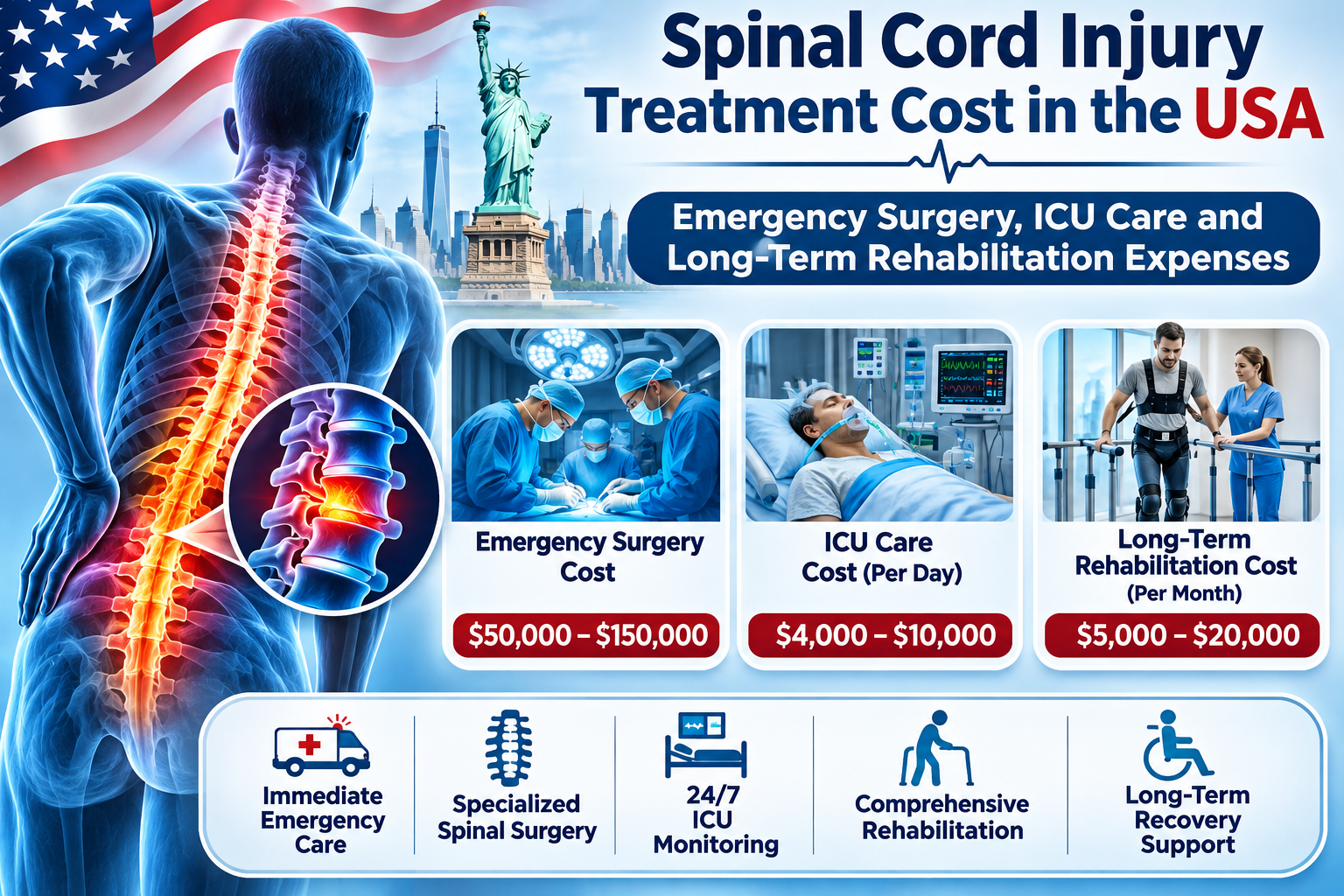
USA Spinal Cord Injury Treatment Price Breakdown
In the United States, treatment is usually provided by a multidisciplinary team that may include emergency physicians, trauma surgeons, neurosurgeons, orthopedic spine surgeons, critical care specialists, nurses, and rehabilitation professionals. The total amount depends on the injury level, neurological damage, associated trauma, surgical requirements, and length of hospital admission.
The following table provides illustrative private-pay planning ranges for major services. Actual charges vary significantly between hospitals, geographic regions, and insurance arrangements.
| Medical Service | Estimated Price (USD) |
|---|---|
| Emergency department and initial assessment | $2,000–$10,000 |
| CT scans, MRI scans, and diagnostic imaging | $2,000–$12,000 |
| Neurosurgeon or orthopedic spine specialist fees | $3,000–$15,000 |
| Spinal decompression or stabilization surgery | $20,000–$100,000+ |
| Intensive care unit admission | $5,000–$15,000+ per day |
| Hospital room, nursing, and inpatient medical care | $10,000–$60,000+ |
| Inpatient spinal cord injury rehabilitation | $20,000–$100,000+ |
| Medication, follow-up, equipment, and outpatient therapy | $5,000–$40,000+ |
These ranges are not a fixed package and should not be added together as a guaranteed quotation. ICU and hospital charges may overlap with other billed services, while surgery estimates may include some operating-room resources. Severe cases can exceed the listed figures, particularly when ventilation, multiple operations, prolonged hospitalization, or treatment of additional injuries is required.
Emergency Spinal Surgery and Neurosurgeon Fees
Not every spinal cord injury requires an operation. However, surgery may be recommended when there is spinal instability, bone displacement, persistent compression of the spinal cord, or another structural problem that requires correction.
Common surgical procedures include:
- Spinal decompression: The surgeon removes or reduces pressure from structures compressing the spinal cord or nerves.
- Spinal stabilization: Screws, rods, plates, or other implants may be used to stabilize injured vertebrae.
- Spinal fusion: Selected vertebrae are joined to create a more stable section of the spine.
- Fracture treatment: Damaged vertebrae may require surgical correction depending on their location and stability.
Neurosurgeon and orthopedic spine surgeon fees depend on professional experience, procedure complexity, hospital location, and the number of specialists involved. Emergency operations may also require surgical assistants, anesthesia professionals, and additional operating-room resources.
Early surgical decompression may be considered for suitable patients. International clinical guidelines recommend considering surgery within 24 hours when medically feasible, depending on the patient’s condition and available resources. The decision must be made by the treating team after assessing the injury and other medical risks. Surgery does not guarantee restoration of movement or sensation, but it may help address ongoing compression and stabilize the spine.
ICU Care and Respiratory Support Expenses
Some patients require intensive care after a spinal cord injury, especially when the injury affects the cervical region or causes serious breathing, circulation, or other medical problems. ICU teams continuously monitor vital signs and manage complications that could threaten the patient’s health.
ICU services may include:
- Continuous monitoring of heart rate, blood pressure, and oxygen levels.
- Mechanical ventilation for patients unable to breathe adequately.
- Medication and fluid management to support circulation.
- Frequent neurological assessments.
- Prevention and treatment of infections.
- Nutrition support and management of other medical complications.
- Specialized nursing care and respiratory therapy.
ICU admission is one of the major contributors to hospital spending because it requires specialized equipment, intensive monitoring, and a high level of staff support. Patients who need a ventilator or prolonged respiratory treatment may remain in critical care for an extended period. The final bill depends on the length of admission and the number of services required.
Long-Term Rehabilitation and Recovery Expenses
Rehabilitation is a major part of spinal cord injury care. Once a patient is medically stable, a specialized rehabilitation team works to improve independence, mobility, strength, communication, and daily living skills. The treatment plan is tailored to the level and severity of the injury.
Rehabilitation may include:
- Physical therapy: Exercises and mobility training to improve strength, flexibility, balance, and movement.
- Occupational therapy: Training to perform daily activities such as dressing, bathing, eating, and using assistive equipment.
- Respiratory therapy: Breathing exercises and airway management when respiratory function is affected.
- Bladder and bowel management: Training and medical support to manage changes in normal function.
- Psychological support: Counseling and adjustment support for patients and families.
- Mobility training: Instruction in using wheelchairs, braces, walkers, or other equipment when needed.
Some patients attend an inpatient rehabilitation program after leaving the acute hospital. Others continue with outpatient therapy or receive services at home. Rehabilitation may continue for months, and certain patients need ongoing support for years.
Equipment may also create additional financial requirements. Examples include wheelchairs, pressure-relief cushions, transfer devices, adjustable beds, braces, and home accessibility modifications. The specific equipment depends on the patient’s abilities and living environment.
Long-Term Medical Care and Possible Complications
Spinal cord injury can affect several body systems, so ongoing medical monitoring may be necessary. The risk of complications depends on the injury level, remaining movement, general health, and quality of preventive care.
Possible long-term medical concerns include:
- Pressure injuries: Reduced movement and sensation can increase the risk of skin damage from prolonged pressure.
- Urinary tract infections: Bladder dysfunction and catheter use can increase infection risk.
- Respiratory infections: Some patients have difficulty clearing mucus or breathing effectively.
- Blood clots: Reduced mobility can increase the risk of deep vein thrombosis and pulmonary embolism.
- Muscle spasticity: Some patients experience involuntary muscle tightness or spasms.
- Chronic pain: Nerve-related or musculoskeletal pain may require continuing management.
- Autonomic dysreflexia: People with certain high-level injuries may develop a dangerous sudden rise in blood pressure triggered by an irritating stimulus below the injury.
Preventive care, regular medical reviews, skin inspection, appropriate mobility support, and timely treatment of infections can help reduce avoidable complications. The care plan should be developed with healthcare professionals familiar with spinal cord injury management.
Factors Influencing Price Differences
Several clinical and financial factors determine the amount a patient may pay for spinal cord injury treatment in the United States.
- Injury severity: Complete injuries and high cervical injuries may require more intensive treatment and longer rehabilitation.
- Emergency surgery: Decompression, stabilization, fusion, or multiple operations can increase hospital charges.
- ICU duration: Extended intensive care, ventilation, and continuous monitoring add substantially to the overall bill.
- Hospital location: Prices vary between states, metropolitan areas, trauma centers, and smaller facilities.
- Specialist fees: Neurosurgeons, orthopedic spine surgeons, anesthesiologists, and other professionals may bill separately.
- Diagnostic imaging: CT scans, MRI examinations, X-rays, and repeat imaging may be required.
- Medication: Pain management, infection treatment, blood clot prevention, and other prescriptions can affect spending.
- Rehabilitation duration: Longer inpatient programs and repeated outpatient therapy appointments increase the total.
- Associated injuries: Head injuries, chest trauma, fractures, or internal injuries may require additional specialists and procedures.
- Long-term support: Mobility equipment, home modifications, personal care, and continuing medical appointments may create ongoing financial needs.
Health Insurance and Payment Planning
Health insurance can cover a substantial portion of medically necessary emergency treatment, surgery, hospitalization, and rehabilitation, but coverage depends on the policy. Private insurance, Medicare, Medicaid, workers’ compensation, and other programs have different eligibility and payment rules.
Families should ask the hospital’s financial department or insurer to explain:
- Which emergency and trauma services are covered.
- Whether the treating hospital and specialists are in-network.
- How surgery, anesthesia, and ICU services are billed.
- Whether inpatient rehabilitation requires separate authorization.
- What deductible, copayment, or coinsurance applies.
- Whether mobility equipment and home care are covered.
- What financial assistance is available for eligible patients.
In an emergency, immediate medical care should never be delayed while a family tries to compare prices or arrange payment. Insurance and financial questions can be addressed with the hospital team after urgent stabilization has begun.
Ways to Manage Long-Term Treatment Expenses
Although spinal cord injury care can require substantial resources, careful planning may help families manage ongoing medical needs.
- Work with a specialized spinal cord injury rehabilitation team.
- Request a written discharge and rehabilitation plan.
- Check insurance coverage for therapy, medication, and mobility equipment.
- Ask about public assistance and disability support programs when eligible.
- Discuss appropriate home equipment before purchasing expensive items.
- Maintain regular follow-up appointments to monitor complications.
- Ask social workers about transportation, home care, and community support services.
- Keep medical records, insurance documents, and treatment estimates organized.
Conclusion
Spinal cord injury treatment in the United States may involve emergency stabilization, diagnostic imaging, spinal surgery, ICU care, inpatient rehabilitation, medication, and long-term medical support. The overall cost depends on the injury level, severity, hospital, surgical requirements, ICU duration, insurance coverage, and rehabilitation needs. Severe injuries involving prolonged critical care and lifelong assistance can become expensive, while the financial needs of less severe injuries may be considerably lower.
Patients and families should work with experienced trauma and spinal cord injury specialists to understand the treatment plan and expected recovery needs. Written financial estimates and insurance guidance can help with planning once emergency care has been provided. All prices in this article are approximate educational estimates, not guaranteed quotations or personalized medical advice. Actual charges and treatment decisions should be confirmed with the treating hospital and insurer.
SEO Keywords
Spinal Cord Injury Treatment Cost in USA, spinal cord injury surgery price, emergency spine surgery expenses, spinal cord injury ICU charges, spinal cord injury rehabilitation cost, neurosurgeon fees USA, spinal cord decompression surgery, spinal stabilization surgery, spinal cord injury MRI price, long-term spinal injury care, spinal cord injury treatment by country, spinal injury health insurance coverage, spinal cord rehabilitation expenses.
