Introduction
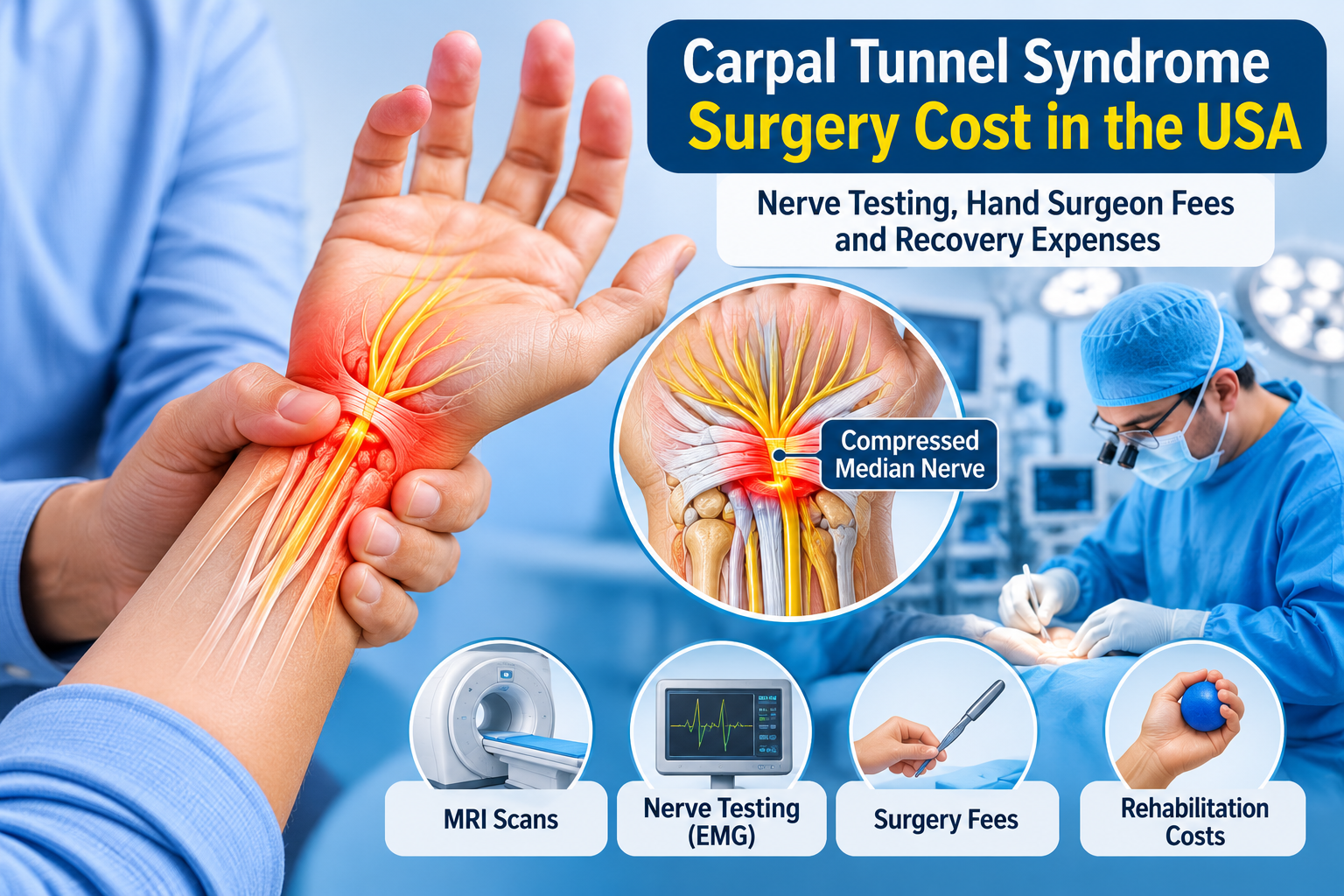
Carpal tunnel syndrome is a condition that develops when the median nerve becomes compressed as it passes through a narrow passage in the wrist called the carpal tunnel. This nerve provides sensation to the thumb, index finger, middle finger, and part of the ring finger. It also helps control certain thumb movements. Pressure on the nerve can cause tingling, numbness, pain, and weakness in the hand.
Symptoms often begin gradually and may become more noticeable at night. Some people experience difficulty holding objects, opening containers, typing, or performing everyday activities. When symptoms continue despite nonsurgical treatment, a doctor may recommend carpal tunnel release surgery. The procedure involves cutting the ligament that forms the roof of the carpal tunnel, creating more space and reducing pressure on the median nerve.
In the United States, the overall cost of treatment may include hand surgeon consultations, nerve conduction studies, electromyography, anesthesia, surgical facility charges, medication, and recovery appointments. Advanced cases requiring additional treatment can become expensive. Understanding the possible expenses helps patients compare providers, review insurance coverage, and plan their treatment.
Understanding Carpal Tunnel Syndrome
The carpal tunnel is a narrow structure in the wrist formed by small wrist bones and a strong ligament. The median nerve and several flexor tendons pass through this space. When pressure increases, the nerve may not function normally.
Common symptoms include:
- Numbness or tingling in the thumb and first three fingers.
- Hand discomfort that becomes worse during the night.
- Weakness when gripping or holding objects.
- Difficulty with buttons, writing, or small objects.
- Pain that may travel from the wrist toward the forearm.
- Reduced thumb strength in advanced cases.
Carpal tunnel syndrome can be associated with pregnancy, diabetes, arthritis, wrist injuries, and repetitive hand activities. However, symptoms can occur without one clearly identifiable cause. Early assessment is important because prolonged pressure may lead to permanent nerve damage or muscle weakness.
Cost Breakdown by Country
Prices for carpal tunnel diagnosis and surgery vary internationally because of differences in healthcare systems, surgeon fees, hospital facilities, medical technology, and insurance arrangements. The following figures are broad private-treatment planning estimates for consultation, testing, surgery, and routine recovery services. They are not guaranteed quotations or identical treatment packages.
| Country | Estimated Treatment Price (USD) | Typical Healthcare Setting |
|---|---|---|
| United States | $2,000–$12,000 | Private hospitals and outpatient surgery centers |
| United Kingdom | $1,500–$5,500 | Private hospitals and hand clinics |
| India | $500–$2,500 | Private multispecialty hospitals |
| Pakistan | $300–$1,800 | Private orthopedic and surgical hospitals |
| Turkey | $1,000–$3,500 | Private surgical hospitals |
| Thailand | $1,200–$4,000 | Private hospitals and specialist centers |
| Australia | $2,000–$7,000 | Private hospitals and day surgery centers |
These ranges are approximate and depend on whether the patient needs one-hand or two-hand surgery, open or endoscopic release, and additional diagnostic testing. Public healthcare may cover eligible residents in some countries, while private patients generally pay according to the provider’s charges and their insurance benefits.
USA Carpal Tunnel Surgery Expense Breakdown
In the United States, carpal tunnel release is commonly performed as an outpatient procedure. Many patients return home on the same day. The final bill may include the surgeon’s professional fee, operating facility, anesthesia, diagnostic tests, and follow-up appointments.
| Medical Service | Estimated Price (USD) |
|---|---|
| Initial hand surgeon consultation | $150–$500 |
| Nerve conduction study | $200–$1,000 |
| Electromyography (EMG) | $200–$1,200 |
| Wrist ultrasound or additional imaging | $150–$700 |
| Surgeon’s professional fee | $700–$2,500 |
| Outpatient surgical facility and operating room | $1,000–$5,000 |
| Anesthesia and medication | $200–$1,000 |
| Follow-up visits and hand therapy, if needed | $200–$1,500 |
These are illustrative private-pay planning ranges, not official national rates. A published analysis of hospital price information found a median listed amount of approximately $10,273 through hospital estimate tools and $7,680 through chargemaster files, with substantial variation between facilities. Another study of hospital listings reported mean charges of approximately $5,800 for open release and $6,307 for endoscopic release. These published figures measure different types of hospital prices and should not be treated as guaranteed patient bills.
Nerve Conduction Studies and EMG Testing Fees
Nerve conduction studies and electromyography are diagnostic tests that may help assess the severity of median nerve compression. They are particularly useful when the diagnosis is uncertain, symptoms are severe, or another nerve condition may be contributing to the problem.
A nerve conduction study uses small electrical signals to measure how quickly and effectively impulses travel along a nerve. Slower signals across the wrist may indicate compression. EMG testing measures electrical activity in selected muscles and can help identify muscle or nerve damage.
Testing expenses depend on the clinic, number of nerves examined, specialist interpretation, and insurance coverage. Some patients may need only a clinical examination. The 2024 American Academy of Orthopaedic Surgeons guideline supports using a clinical assessment tool in appropriate patients rather than routinely requiring nerve testing for every diagnosis. The doctor decides whether testing will provide useful information for an individual case.
Hand Surgeon Fees and Surgical Techniques
Carpal tunnel release is usually performed by a qualified hand surgeon, orthopedic surgeon, plastic surgeon, or another appropriately trained specialist. Professional fees vary according to the surgeon’s experience, location, procedure method, and facility arrangements.
There are two commonly used surgical approaches:
- Open carpal tunnel release: The surgeon makes a small incision in the palm or wrist and cuts the transverse carpal ligament to relieve pressure on the median nerve.
- Endoscopic carpal tunnel release: The surgeon uses a small camera and specialized instruments through one or more small incisions to divide the ligament.
Both techniques aim to reduce pressure on the median nerve. The best approach depends on the patient’s condition, surgeon experience, and available facilities. Endoscopic surgery may involve different equipment and facility charges, while open surgery remains a widely used option. Patients should discuss the benefits, possible complications, and expected recovery of each method.
Hospital, Anesthesia and Operating Facility Expenses
Many carpal tunnel procedures are completed in an outpatient surgery center rather than requiring an overnight hospital admission. Local anesthesia is commonly used, although sedation or another anesthesia approach may be selected according to the procedure and patient’s needs.
Facility-related expenses may include:
- Operating-room use and surgical supplies.
- Nursing and recovery-room services.
- Sterile instruments and medical equipment.
- Anesthesia professional services, when separately billed.
- Wound dressing and postoperative supplies.
Patients should ask whether the quoted amount includes both the surgeon and facility. Separate bills may arrive from the surgeon, anesthesia provider, and surgical center. A written estimate can help identify services that are not included in a package.
Recovery, Medication and Rehabilitation Expenses
Recovery after carpal tunnel release depends on the severity of nerve compression, the surgical method, the patient’s general health, and the type of work performed. Many people notice improvement in nighttime tingling relatively soon, but numbness and weakness may take longer to resolve, especially when nerve compression has been present for a long time.
After surgery, patients may be advised to:
- Keep the dressing clean and follow wound-care instructions.
- Elevate the hand to help reduce swelling.
- Move the fingers gently as instructed by the surgical team.
- Avoid heavy gripping and strenuous lifting during early healing.
- Attend scheduled wound checks and follow-up appointments.
- Use prescribed or recommended pain medication safely.
Most patients do not require extensive formal physical therapy after routine carpal tunnel release. Hand therapy may be recommended if stiffness, weakness, scar sensitivity, or persistent functional difficulties develop. The American Academy of Orthopaedic Surgeons notes that grip and pinch strength often return over approximately two to three months, although recovery can take longer in severe cases.
Factors Influencing Price Differences
Several medical and financial factors can affect the amount a patient pays for carpal tunnel treatment in the United States.
- Insurance coverage: Deductibles, copayments, coinsurance, and network rules influence the patient’s share.
- Facility selection: An outpatient surgery center may charge differently from a hospital outpatient department.
- Surgeon experience: Professional fees vary by location, qualifications, and provider arrangements.
- Diagnostic testing: Nerve conduction studies and EMG may add to the total bill when required.
- Surgical technique: Open and endoscopic procedures may have different facility and equipment charges.
- Number of hands treated: Surgery on both wrists may require additional services and recovery planning.
- Medical complexity: Diabetes, arthritis, previous wrist injuries, or other nerve disorders can affect care.
- Recovery requirements: Additional visits, medication, or hand therapy may increase spending.
How Health Insurance Affects the Final Bill
Many US health insurance plans cover medically necessary carpal tunnel evaluation and surgery, but the amount paid by the patient depends on the policy. Some plans require prior authorization, in-network providers, or documentation that symptoms have not improved with conservative treatment.
Before scheduling surgery, patients should confirm:
- Whether the hand surgeon and surgical facility are in-network.
- Whether nerve testing requires prior authorization.
- Whether open or endoscopic release is covered.
- How much deductible remains for the current policy year.
- Whether anesthesia and follow-up services are billed separately.
- Whether hand therapy is included in the plan.
Uninsured patients can request a written self-pay estimate and ask about payment plans or financial assistance. They should clarify whether the quotation includes the surgeon, facility, anesthesia, and postoperative appointments.
Ways to Manage Treatment Expenses
Patients can take practical steps to manage their medical spending while receiving appropriate treatment.
- Compare written estimates from qualified hand surgeons.
- Ask whether an outpatient surgery center is suitable.
- Confirm insurance network status before booking appointments.
- Request an itemized estimate covering professional and facility services.
- Ask whether nerve testing is necessary for the diagnosis.
- Discuss nonsurgical options when medically appropriate.
- Follow postoperative instructions to support safe healing.
Conclusion
Carpal tunnel syndrome treatment in the United States may involve specialist consultations, nerve conduction studies, EMG testing, surgery, medication, and recovery appointments. The overall cost depends on the surgical technique, provider, facility, diagnostic requirements, and insurance coverage. More complicated cases or treatment involving both wrists can become expensive, while many routine procedures are completed as outpatient surgery.
Patients should obtain written estimates, verify insurance benefits, and discuss open and endoscopic surgery with a qualified hand specialist. Early diagnosis and appropriate treatment can help protect median nerve function and improve hand comfort. All prices in this article are approximate educational estimates, not guaranteed quotations or personalized medical advice. Actual charges and treatment decisions should be confirmed with the treating provider and insurer.
SEO Keywords
Carpal Tunnel Syndrome Surgery Cost in USA, carpal tunnel release surgery price, nerve conduction study fees, EMG test price USA, hand surgeon consultation fees, open carpal tunnel surgery expenses, endoscopic carpal tunnel release price, median nerve compression treatment, carpal tunnel recovery expenses, hand surgery insurance coverage, carpal tunnel treatment prices by country.
