Introduction
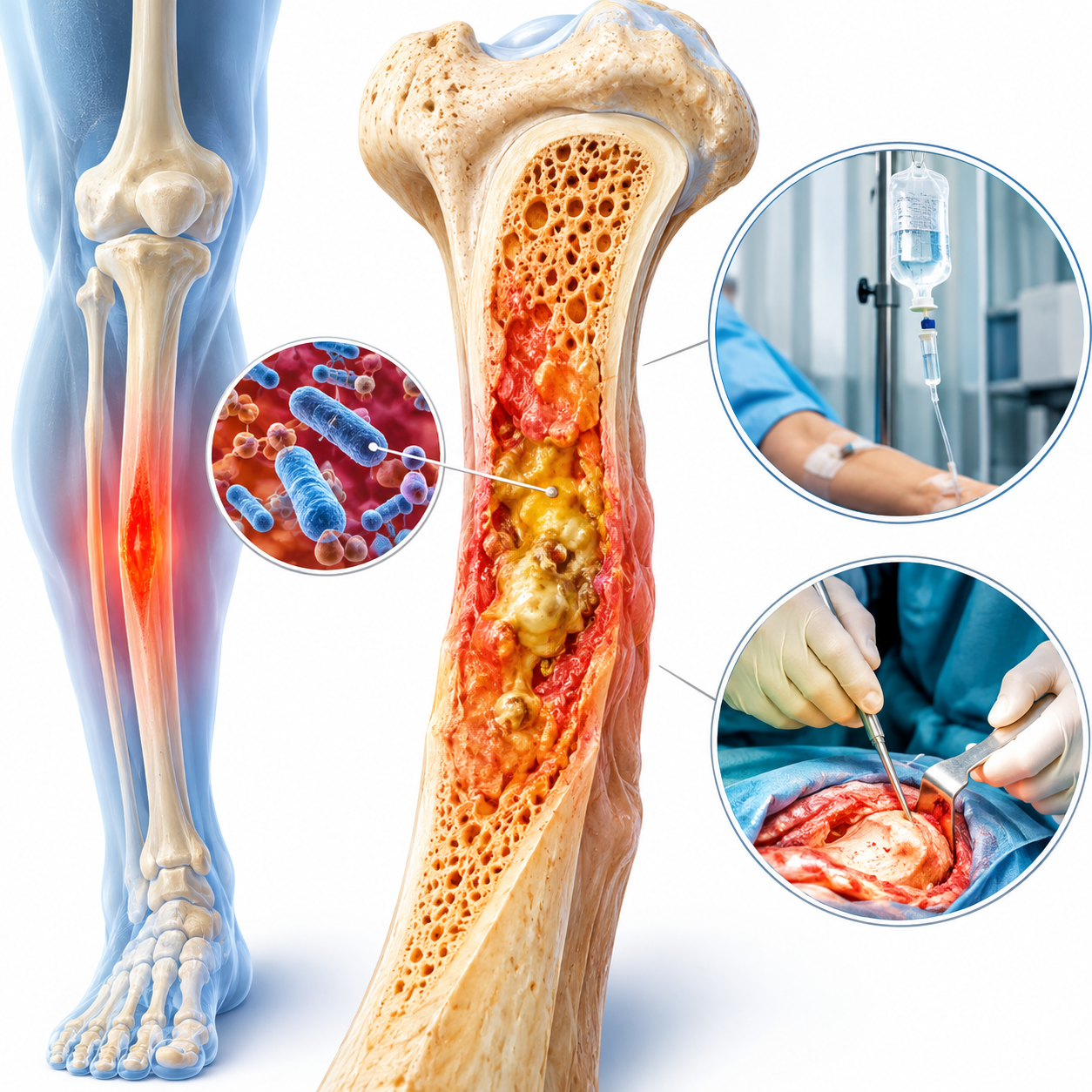
Osteomyelitis is a serious bone infection that develops when bacteria or, less commonly, fungi enter bone tissue. Infection can reach a bone through the bloodstream, spread from nearby infected tissue, or enter following an open injury or surgery. It may affect the arms, legs, spine, feet, or other bones. Common symptoms include persistent bone pain, swelling, warmth, redness, fever, and difficulty moving the affected area.
Treatment usually requires prescription antibiotics, diagnostic imaging, laboratory tests, and specialist care. Some patients recover with medication alone, while others need surgery to remove infected or dead bone, drain an abscess, or manage damaged tissue. Chronic infections can require prolonged treatment and repeated procedures.
In the United States, the overall cost of osteomyelitis treatment depends on infection severity, hospital admission, antibiotic selection, surgery, and follow-up care. Long hospital stays, intravenous medication, and complex reconstruction can become expensive. Understanding possible medical expenses helps patients discuss treatment options, insurance coverage, and financial planning with their healthcare providers.
Understanding Osteomyelitis and Its Treatment
Osteomyelitis can be classified as acute or chronic. Acute osteomyelitis develops over a relatively short period, whereas chronic infection may persist or return after initial treatment. Chronic cases can involve damaged bone, abscesses, poor blood supply, or draining wounds.
Doctors select treatment according to the infection’s location, suspected organism, laboratory findings, and the patient’s overall health. Common treatment approaches include:
- Oral or intravenous antibiotics to eliminate the infection.
- Blood tests and cultures to identify the responsible organism.
- MRI scans and other imaging to assess affected bone.
- Surgical drainage when an abscess or collection of infected material is present.
- Debridement to remove dead or infected tissue when necessary.
- Wound care and reconstructive treatment for selected complicated cases.
Cost Breakdown by Country
Private healthcare prices differ between countries because of hospital facilities, specialist fees, medication availability, surgical technology, and insurance arrangements. The following figures are broad planning estimates for diagnosis and treatment. They are not official national tariffs or guaranteed hospital quotations. The actual amount depends on whether a patient needs antibiotics alone, surgery, or prolonged inpatient care.
| Country | Estimated Treatment Price (USD) | Typical Healthcare Setting |
|---|---|---|
| United States | $5,000–$50,000+ | Private hospitals and specialist infection centers |
| United Kingdom | $3,000–$20,000 | Private hospitals and orthopedic clinics |
| India | $1,000–$8,000 | Private multispecialty hospitals |
| Pakistan | $700–$6,000 | Private hospitals and orthopedic centers |
| Turkey | $2,000–$12,000 | Private surgical hospitals |
| Thailand | $2,500–$15,000 | Private hospitals and international clinics |
| Australia | $3,000–$25,000 | Private hospitals and specialist services |
These ranges are not directly comparable packages. A simple infection treated with medication may require much less spending than chronic osteomyelitis involving surgery, reconstruction, and an extended hospital stay. In countries with public healthcare systems, eligible residents may receive some services through government-funded care, while private patients may pay separately.
USA Osteomyelitis Treatment Expense Breakdown
In the United States, a treatment plan can include several separate services. Some patients need outpatient evaluation and medication, while severe infections may require admission, surgery, and extended antibiotic administration.
| Medical Service | Estimated Price (USD) |
|---|---|
| Initial orthopedic or infectious disease consultation | $150–$600 |
| Bone MRI scan | $400–$2,500 |
| Blood tests and bacterial cultures | $150–$800 |
| Bone biopsy and laboratory analysis | $1,000–$5,000 |
| Intravenous antibiotic treatment | $1,000–$10,000+ |
| Surgical drainage or bone debridement | $5,000–$25,000+ |
| Hospital admission and inpatient care | $5,000–$30,000+ |
| Follow-up visits and wound care | $300–$2,000 |
These figures are illustrative private-pay ranges, not a fixed national fee schedule. Some services may already be included in a hospital or surgical package, so patients should not simply add every amount together. A hospital admission involving complications can exceed the ranges shown.
MRI Scans and Diagnostic Testing Fees
MRI is particularly useful for detecting inflammation, bone marrow changes, and the spread of infection into nearby soft tissue. It can help doctors identify abscesses and determine how much of the bone may be affected. X-rays may also be performed, although early infection may not be clearly visible on a conventional X-ray.
Diagnostic investigations may include:
- Blood cultures: Help identify bacteria circulating in the bloodstream.
- Complete blood count: Provides information about white blood cells and other blood components.
- CRP and ESR tests: Measure inflammation and may help monitor clinical progress.
- MRI: Helps assess bone marrow and surrounding soft tissue involvement.
- CT scans: May provide additional information about bone destruction or structural changes.
- Bone biopsy: A tissue sample may be collected for microbiological testing to identify the organism.
The choice of tests depends on symptoms and the suspected source of infection. MRI prices vary according to the facility, location, and whether contrast material is required. Patients should ask whether the radiologist’s interpretation is included in the quoted amount.
Bone Infection Surgery and Surgeon Fees
Surgery may be necessary when antibiotics alone are unlikely to control the infection, particularly when there is an abscess, dead bone, or infected material that needs removal. An orthopedic surgeon may perform a procedure called debridement to remove damaged tissue and help healthy tissue recover.
Depending on the infection, surgery may involve:
- Opening and draining an abscess.
- Removing dead or infected bone tissue.
- Cleaning the affected area and collecting samples for culture.
- Removing infected hardware in selected cases.
- Using temporary or permanent materials to manage bone defects.
- Reconstructing damaged tissue when required.
The surgeon’s professional fee is only one part of the surgical bill. Operating-room charges, anesthesia, nursing, implants, laboratory services, and postoperative monitoring may be billed separately. Complex chronic infections can require more than one operation, increasing the overall financial burden.
Antibiotic Treatment and Medication Expenses
Antibiotics are central to osteomyelitis treatment. The medicine is selected according to the suspected or confirmed organism, culture results, antibiotic sensitivity, infection location, and the patient’s medical history. Staphylococcus aureus is one important cause of bacterial bone infection, but other bacteria can also be responsible.
Some patients begin with intravenous antibiotics in a hospital or outpatient infusion center. Others may be suitable for oral medication after clinical assessment. The route and duration depend on the infection and response to treatment.
Medication-related expenses may include:
- Antibiotic medicine and pharmacy dispensing.
- Intravenous administration and infusion supplies.
- Laboratory monitoring during treatment.
- Prescription medicines for pain or other symptoms.
- Outpatient nursing or infusion-center services.
For many cases of bacterial osteomyelitis without retained infected implants, specialist guidance supports a treatment course of up to six weeks when adequate source control has been achieved. Individual cases may require a different duration. Chronic infections, retained hardware, unusual organisms, and complications need specialist assessment. Patients should never stop antibiotics early or change doses without medical advice.
Hospitalization and Inpatient Expenses
Severe osteomyelitis may require hospital admission, especially when a patient has high fever, bloodstream infection, significant tissue damage, or needs urgent surgery. Hospital charges can include the room, nursing care, physician services, medication, imaging, laboratory testing, and operating-room use.
A US hospital price comparison for bone infection admissions under a Medicare diagnosis-related group reported an average gross charge of approximately $40,576 in data current to October 2026. This is a published pre-insurance hospital charge benchmark for a specific billing category, not the average amount every patient pays. Negotiated insurance payments and actual patient responsibility can be substantially different.
Length of stay depends on infection severity, the need for surgery, response to antibiotics, and whether the patient can safely continue treatment outside the hospital. Some patients transition to home infusion services or outpatient care after their condition stabilizes.
Recovery, Wound Care and Follow-Up Expenses
Recovery may continue after the infection is controlled. Patients who undergo surgery may need dressing changes, wound checks, mobility support, and physical therapy. Those with significant bone damage may require additional rehabilitation or reconstructive treatment.
Follow-up care may involve:
- Orthopedic and infectious disease specialist appointments.
- Wound assessment and dressing supplies.
- Blood tests to monitor inflammation and medication safety.
- Physical therapy to improve strength and movement.
- Repeat imaging when symptoms or clinical findings indicate a need.
- Additional surgery for persistent infection or structural damage.
Not every patient needs repeated MRI scans. Doctors generally decide whether further imaging is useful based on symptoms, examination, and treatment response.
Factors Influencing Price Differences
Several medical and financial factors can affect the amount patients pay for osteomyelitis treatment in the United States.
- Infection severity: Extensive or chronic infection may require longer treatment and more complex surgery.
- Hospital selection: Charges differ between large hospitals, specialist centers, and outpatient facilities.
- Antibiotic choice: The medicine, duration, and method of administration affect pharmacy and infusion expenses.
- Diagnostic requirements: MRI, biopsy, cultures, and laboratory monitoring add to the total.
- Surgical complexity: Debridement, reconstruction, and repeat procedures require additional resources.
- Insurance coverage: Deductibles, copayments, coinsurance, and network rules determine patient responsibility.
- Length of admission: Longer hospital stays generally increase facility and care charges.
- Underlying conditions: Diabetes, circulation problems, and immune disorders may complicate treatment.
How Health Insurance Affects the Final Bill
Many US health insurance plans cover medically necessary evaluation, hospitalization, antibiotics, and surgery, but coverage depends on the policy and provider network. Prior authorization may be required for certain imaging studies, procedures, or outpatient infusion services.
Before treatment, patients should confirm:
- Whether the hospital and specialists are in-network.
- Whether MRI scans, biopsy, and surgery require prior authorization.
- Whether intravenous antibiotics and infusion services are covered.
- How much deductible remains for the current policy year.
- Whether home infusion and wound care are included.
Uninsured patients can request an itemized self-pay estimate and ask about financial assistance or payment arrangements. They should clarify whether surgeon, anesthesia, facility, and laboratory services are included.
Conclusion
Osteomyelitis treatment in the United States may involve MRI scans, laboratory tests, specialist consultations, antibiotics, surgery, and hospital care. The overall cost depends on infection severity, medication requirements, surgical complexity, hospital stay, and insurance coverage. Chronic infections and extensive bone reconstruction can become expensive, while some less complicated cases may be treated without major surgery.
Patients should seek timely medical assessment, obtain written treatment estimates, and confirm insurance benefits before planned procedures. Following the prescribed antibiotic plan and attending recommended follow-up appointments are important parts of care. All prices in this article are approximate educational estimates, not guaranteed quotations or personalized medical advice. Actual charges and treatment decisions should be confirmed with the treating healthcare team and insurer.
SEO Keywords
Osteomyelitis Treatment Cost in USA, bone infection surgery price, osteomyelitis antibiotic treatment cost, bone debridement surgery expenses, MRI scan price USA, infectious disease specialist fees, bone biopsy price, intravenous antibiotic therapy expenses, osteomyelitis hospital charges, chronic osteomyelitis treatment, bone infection treatment prices by country, osteomyelitis insurance coverage.
Leave a Reply